Reflections from Singapore: What Another Context Taught Me About Chaplaincy
By Chaplain Dr. Joshua Salaam
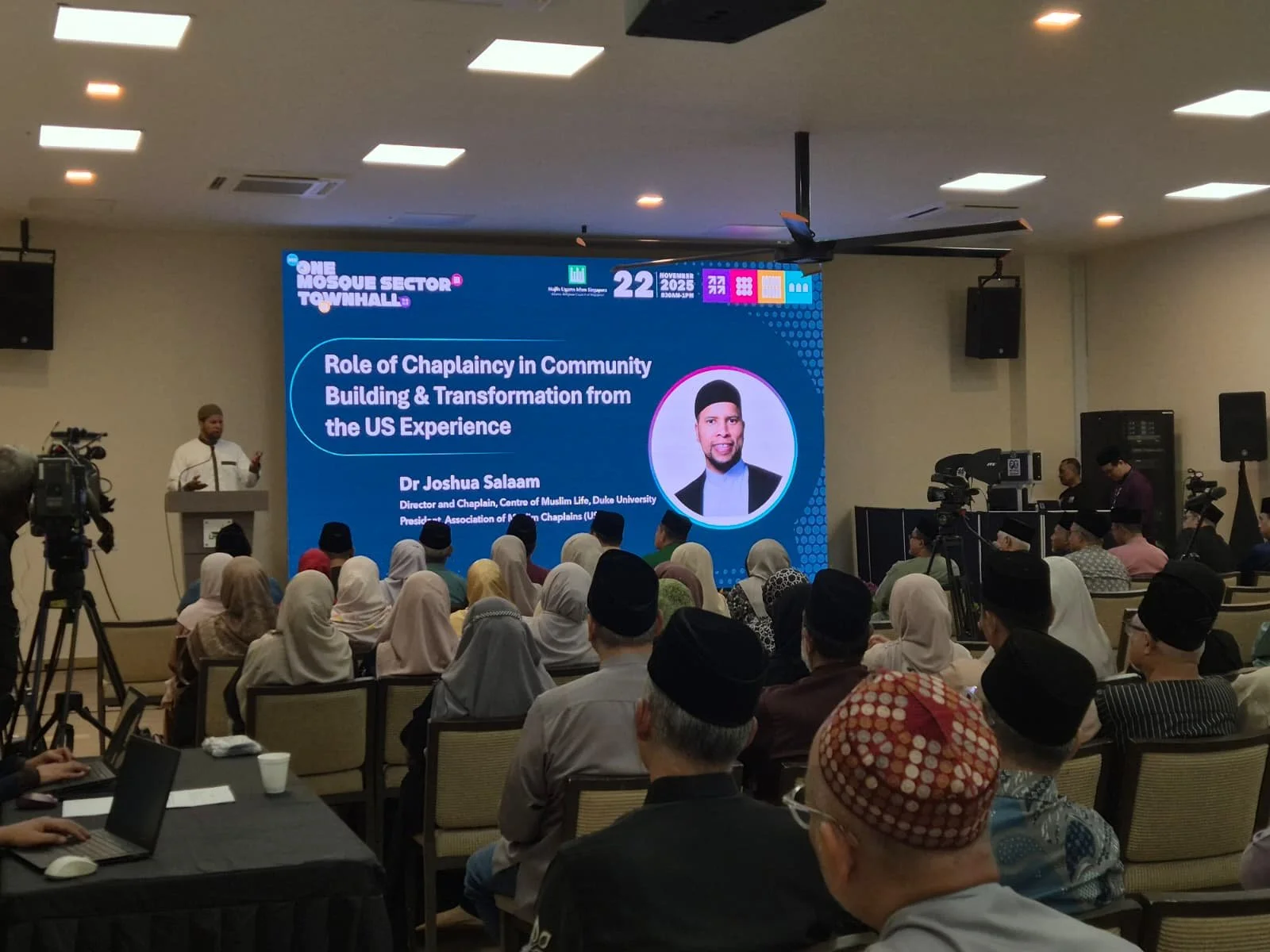
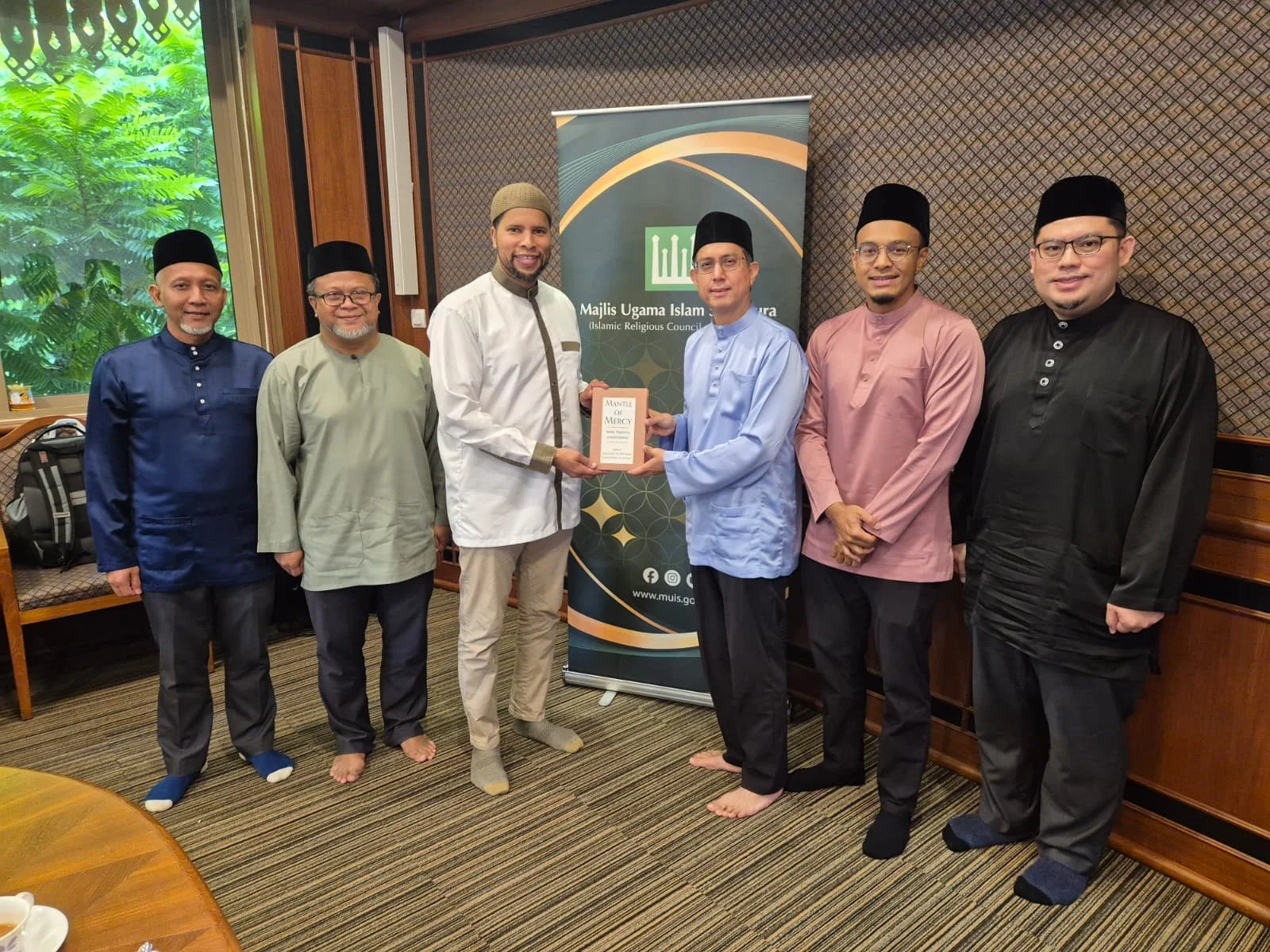
Recently, I had the opportunity to travel to Singapore to speak about Islamic chaplaincy and to listen carefully to how Muslim leaders there are thinking about spiritual care. I went primarily to share perspectives from the North American context. I returned with a deeper appreciation for how much chaplaincy is shaped by institutions, culture, and public expectations, and how some of our core commitments remain the same no matter where we serve.
I want to share a few reflections with fellow chaplains, not as conclusions, but as points of conversation.
Chaplaincy Grows Where Institutions Make Space
One of the most striking things about Singapore is the structured relationship between the Muslim community and the secular government. About fifteen percent of the population is Malay Muslim, and there is a formal system in place for certifying Islamic scholars, known as the Asatizah. These scholars primarily serve in mosques with clear boundaries and accountability. However, they are working to expand Asatizah into prisons, hospitals, and other public-facing roles.
What struck me was how different this is from the American context. In the United States, chaplaincy did not develop because religious communities sat down and designed it. It developed because institutions needed it. Hospitals, prisons, universities, and the military recognized gaps in care and invited religious professionals into those spaces. Only later did professional standards and training models catch up.
Singapore is in a different moment. They are asking foundational questions before chaplaincy becomes widespread. That alone is worth paying attention to.
Para Counselors as a Window into Chaplaincy
One role that kept coming up in conversation was that of the para counselor. Para counselors in Singapore are known as trained listeners. They are not licensed therapists, and they are not religious scholars. Their role carries a sense of neutrality, and the public understands their boundaries.
This sparked an important realization for me. Chaplaincy often emerges not from religious authority, but from function. Wherever there is a need for sustained presence, deep listening, and non-judgmental accompaniment, chaplaincy finds a foothold.
Several organizers shared openly that it would be difficult for many scholars to suspend their teaching and guidance instincts, especially when the community expects answers and direction from them. That honesty matters. It raises the question of whether chaplaincy in Singapore might grow more naturally by expanding the role of para counselors, or by carefully training a subset of them in spiritual care competencies rather than starting with scholars alone.
For those of us serving as chaplains, this was a helpful reminder. Chaplaincy is not defined by who we are on paper. It is defined by how we show up.
“Chaplaincy is not defined by who we are on paper. It is defined by how we show up.”
Presence Without Agenda Is Still the Hardest Skill
Across conversations, the idea that generated the most questions was also the most familiar to us as chaplains: presence without agenda.
Many people struggled to see why chaplaincy was needed when there were already counselors and religious scholars. It took time to articulate that chaplaincy is not about fixing, diagnosing, or instructing. It is about staying. It is about creating space where people can process pain, doubt, and meaning without being pushed toward resolution.
Even para counselors, as skilled as they are, are often tasked with evaluating and referring. Chaplains are trained to do something different. We sit with suffering. We return again and again. We resist the urge to solve.
What was less familiar in the Singapore context was the idea that this kind of presence is not just a personal virtue, but a professional competency that requires training, supervision, and accountability. Once that distinction was clear, many recognized both how difficult this work is and how valuable it could be in hospitals, prisons, and universities.
Formation Matters More Than Titles
One thing that became clear is that any future chaplaincy model in Singapore will need strong experiential training. Classroom learning alone is not enough. Clinical pastoral education, or something comparable, is essential.
What excited me was the possibility Singapore has to create consistency. With its network of mosques and strong institutional partnerships, there is real potential for a shared formation model across settings. That level of coordination is something we often struggle to achieve in the United States.
At the same time, there were moments when expectations drifted toward chaplains functioning as counselors or religious authorities. This is understandable, especially in a context where those roles are already well-defined. It also highlights the importance of boundaries. Chaplaincy loses its integrity when it tries to be everything.
A Final Reflection
I left Singapore impressed by the care and seriousness with which these questions are being approached. There is no rush to implement. There is a willingness to ask hard questions and to learn from other contexts without copying them.
For us as chaplains, Singapore offers a useful mirror. It reminds us that chaplaincy is not inevitable. It exists because institutions make room for it and because we are disciplined enough to protect its core commitments.
I am grateful for the conversations and look forward to continuing them, both internationally and within our own chaplaincy community.